Workforce Planning for Construction Projects in Israel: How to Avoid Labour Shortages on Site
A practical workforce planning approach for Israeli contractors — forecasting trades by project phase, planning lead times, building a reserve and keeping skilled Sri Lankan crews productive from start to handover.
 Dilash Priyashan · 17 October 2026 · 3 min read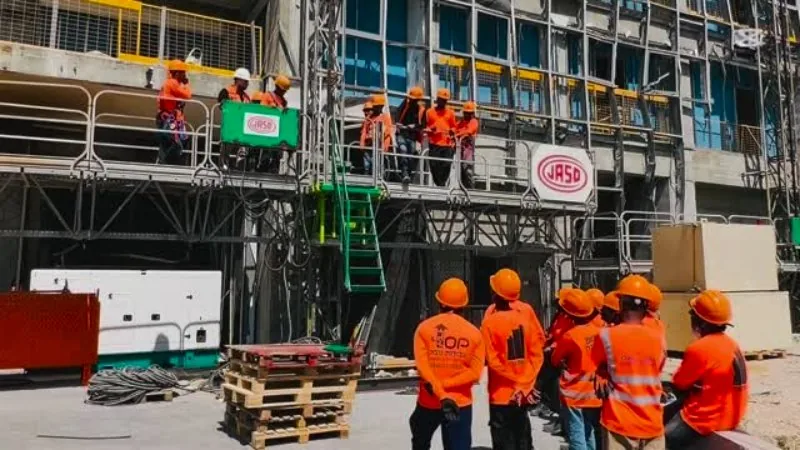
Most delays I see on construction projects are not caused by concrete, cranes or drawings. They are caused by people not being in the right place at the right time — a slab waiting for formwork carpenters, a floor waiting for steel fixers, a finishing phase that starts with half the tilers it needs.
Workforce planning is how you prevent that. Here is the approach I use when coordinating skilled Sri Lankan construction crews for Israeli projects.
1. Plan by trade and phase, not by headcount
"We need 40 workers" is not a plan. Break the project into its phases and ask which trades each phase depends on:
| Phase | Critical trades |
|---|---|
| Structure | Formwork / shuttering carpenters, steel fixers, concrete crew |
| Envelope | Masons, scaffolding and height-work crews |
| Finishing | Tilers, plasterers, general workers |
Then estimate how many of each trade, from when, until when. That turns a headcount into a timeline you can actually manage.
2. Work backwards from the start date
Bringing in a foreign workforce goes through official processes, and those take time. The practical rule is simple: the date a trade is needed on site is the end of the planning, not the beginning. Work backwards — documentation, arrival, accommodation, induction — and start early enough that the crew is ready when the phase begins.
Because rules and procedures change, always plan with someone who follows the current requirements rather than relying on how it worked last year.
3. Build a small reserve
Every project loses capacity somewhere: illness, transfers between sites, workers who are better suited to a different trade. A small reserve — or a plan to move people between your sites — keeps one gap from stopping a whole phase.
4. Match people to the right trade
Putting an experienced formwork carpenter on general labour wastes skill; putting a general worker on formwork costs time and safety. When a crew arrives, take the time to confirm each person's real experience and place them accordingly. From my own time working formwork on Israeli sites, a well-matched crew is productive within days.
5. Plan the transitions between phases
The riskiest moments are the hand-overs: structure to envelope, envelope to finishing. Plan who moves where before the phase changes — which workers transfer to the next site, which trades ramp up, which ramp down. Transfers that are planned two weeks ahead are smooth; transfers decided the night before are not.
6. Keep accurate, simple records
Good planning needs good data. Track who is on which site, in which trade, from which date, and keep payroll reports and workforce records up to date. Digital tools make this much easier — one place for deployments, documents and records means you can see a shortage coming before it reaches the site.
7. Plan for retention, not just recruitment
The cheapest worker to find is the one you already have. Correct and on-time pay, decent accommodation and transport, clear communication in Sinhala and a coordinator the crew trusts — these keep skilled people on your project from start to handover.
Planning a project and want a workforce plan that holds up on site? Share your phases, trades and timeline and I'll walk you through how we can support it.
Frequently asked questions
How early should a contractor start planning the workforce for a new project?+
As early as the programme allows. Foreign workforce arrangements run through official processes that take time, so the headcount by trade and phase should be planned well before the work starts — ideally when the project schedule is first agreed.
What is the most common cause of labour shortages on construction sites?+
Planning by total headcount instead of by trade and phase. A site can have plenty of workers overall and still stall because it is short of formwork carpenters or steel fixers at the exact moment those trades are on the critical path.
How can a contractor reduce the risk of losing workers mid-project?+
Retention is part of planning: correct and on-time pay, decent accommodation and transport, clear communication in the workers' language and a coordinator they trust to raise problems with. Keeping a skilled crew is far cheaper than replacing it.